Italy: Lifestyle Choices, Visa Paths & Market Truths
A sensory, practical comparison of Italian lifestyles, neighbourhoods, visa routes and market signals — fall in love with Italy, then buy with confidence.
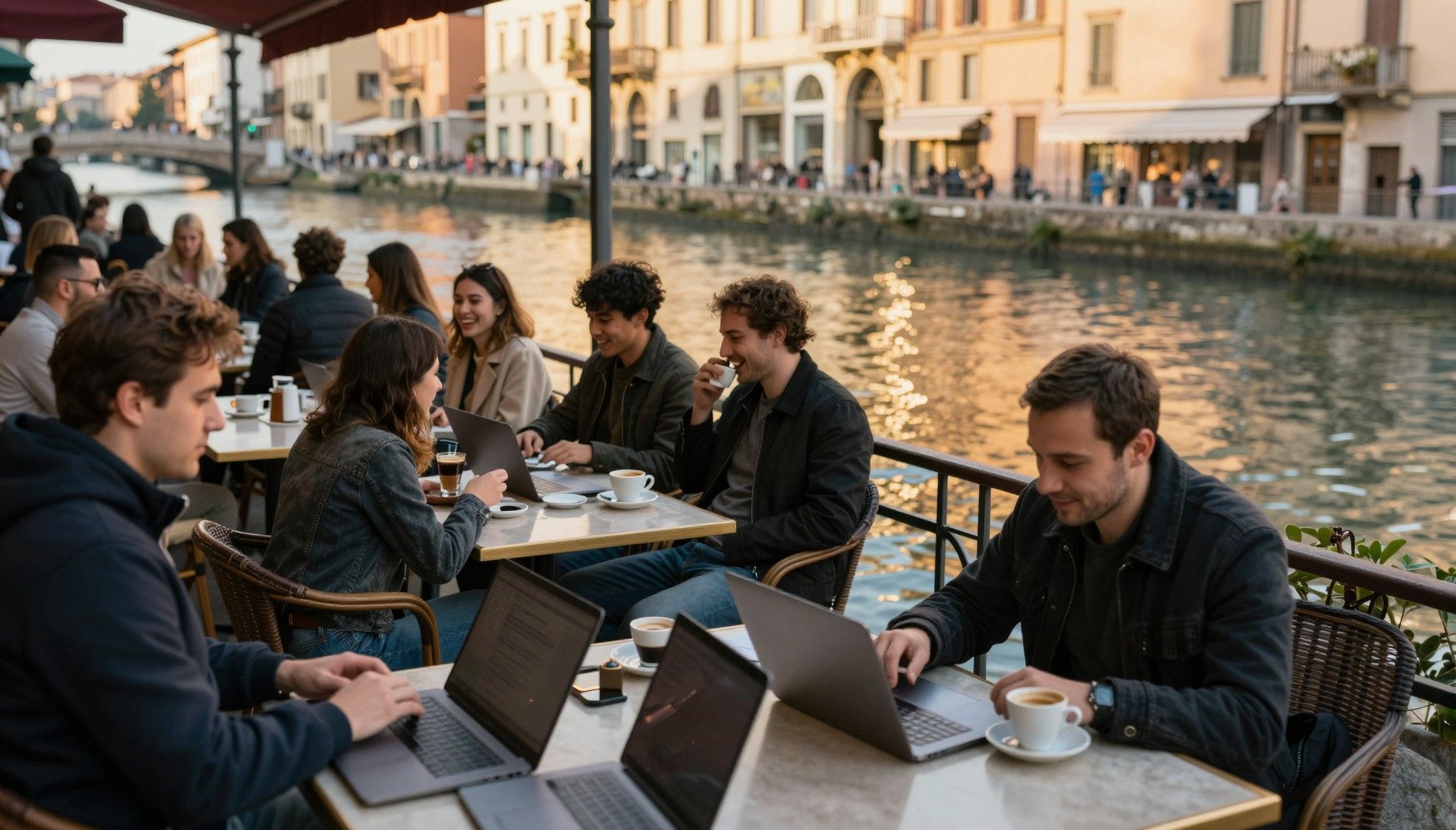
Imagine stepping out of a tram in Trastevere with an espresso in hand, then wandering five minutes to a sun-warmed rooftop where a freelancer edits code while the scent of fresh focaccia drifts up from the street below. Italy isn’t a single mood — it’s piazzas and pines, seaside cliffs and medieval lanes, coworking cafés and late-night aperitivo culture. For nomads and future residents, that variety is intoxicating — and it changes the kind of property, visa, and neighbourhood that will actually fit your life. This piece pairs those day-in-the-life scenes with hard facts so you can fall in love and still make a smart buy.
Living the Italy lifestyle

Italy’s daily rhythm moves on coffee, markets and conversation. Mornings are for espresso and a swift cornetto; afternoons are for siesta in smaller towns and focused work sessions in buzzy Milan cafés for city nomads. Evenings are social: a passeggiata, fresh seafood on the coast, or homemade pasta in hill towns. That slow-and-social tempo influences what people want in a home — a bright kitchen for cooking, reliable internet for Monday calls, and a nearby piazza that acts as the living room.
Rome (Trastevere to Prati) — old streets, modern remote work
Picture narrow cobblestone streets, artisan bakeries, and evening chatter spilling from trattorie. Trastevere is a magnet for creatives and long-term expats who crave character, while Prati offers quieter, wide avenues and better logistics for families and longer stays. If you need coworking and fast transit, Prati’s proximity to central stations and business hubs beats the romantic chaos of Trastevere — but the latter gives you the neighborhood life you came for.
Tuscany & Umbria hill towns — slow life with renovation upside
Cortona, Orvieto, and pockets of the Val d'Orcia offer stone houses, vineyards, and quiet streets where neighbors still trade recipes. These areas shine if you value space, gardens, and the DIY joy of restoring an old farmhouse. Practical note: rural living often means lower market competition but higher renovation and energy retrofit costs; ask local agents about building permits and seismic regulations before falling for cracked-stone charm.
- Lifestyle highlights to scout during visits
- Milan: coworking density and evening aperitivo streets (Corso Como, Navigli).
- Amalfi Coast: micro-communities, cliffside terraces, seasonal rental demand.
- Bologna: food markets (Mercato di Mezzo), student energy, more affordable city living.
Making the move: lifestyle meets real estate reality

Falling in love with a street is step one; understanding market momentum is step two. Italy’s housing market has been recovering since 2024 with rising transactions and regional variation in price growth — official data and sector reports show modest national gains but big local differences. That means timing, local knowledge and a trusted agency who knows municipal quirks are your most valuable tools.
Property styles and what they mean for daily life
A historic centro storico flat gives you morning steps to cafes and evening serenades — but thin walls, stairs, and older systems. A new-build in a Milan suburb delivers elevators, insulation, and room for a home office. A farmhouse outside Siena gives land and privacy but adds commuting and renovation responsibilities. Match the type to how you want to spend Saturdays: market strolls or garden afternoons.
Work with agencies that know both lifestyle and law
Find agents who can show you a neighbourhood at 9am on a weekday and 6pm on a Saturday: that’s when you’ll see real life. Local agencies also save time on red tape — from cadastral checks to building permits to energy certificates — and will flag stubborn issues like flood zones or heritage restrictions that affect renovations. Use agencies to test your lifestyle assumptions: can you get 200 Mbps? Is there a reliable supermarket nearby? Those are the details that shape day-to-day happiness.
- Steps that balance lifestyle and logistics
- Visit at different times of year — see a summer weekend and a winter weekday to spot seasonal traps.
- Test remote-work setup: measure mobile signal, ask about fibre availability, and try a local coworking day pass.
- Get a bilingual checklist from your agent: diagnostics, seismic compliance, and utilities transfer.
Insider knowledge: visa routes, money realities, and expat life
Your residency path shapes what you can do with the property. Elective residency suits those with independent income who won’t seek employment in Italy, while other visas (work, family reunion, or investor programs) follow different rules and timelines. Practical tip: start visa conversations early — some consulates require bank and housing proof — and pair visa planning with a local accountant or immigration-savvy agency to avoid surprises.
Cultural quirks that affect buying and living
Sundays can mean quiet markets and closed shops in small towns; deliveries and trades may pause. Italians value formality in contracts and strong in-person relationships — showing up matters. Learn basic Italian phrases for neighbourhood interactions; that small effort unlocks warmth and faster help from local tradespeople. Also, don’t assume zoning is obvious: a house labelled ‘sea view’ may be subject to strict coastal conservation rules.
What expats wish they'd known sooner
Many buyers underestimate renovation timelines and local permit hoops; others overpay for proximity to tourist hotspots without checking year-round livability. A frequent regret: choosing the most romantic village instead of the one with a weekly market and basic services. Use local market reports to compare neighbourhood trends — Nomisma and national statistics show recovery but also highlight that growth isn’t uniform, so micro-local advice is priceless.
- Red flags to watch for during viewings
- Unclear ownership records or recent, unexplained subdivisions.
- No energy performance certificate (APE) or missing seismic classification in older builds.
- Neighbourhood that’s lively in high season but deserted off-season — check winter weekdays.
Italy rewards buyers who treat the move as a cultural and practical project at once. Live like a local during visits, build relationships with agents who know both coffee shops and cadastre offices, and align your visa path with the life you want to lead here. Start with a shortlist of neighbourhoods, an agent who will show you real daily rhythms, and a visa conversation at your nearest consulate. Do that, and the cobbled streets won’t just charm you — they’ll fit you.
Danish investor and relocation advisor focusing on Portugal and the Algarve; loves coworking culture and expat networks.