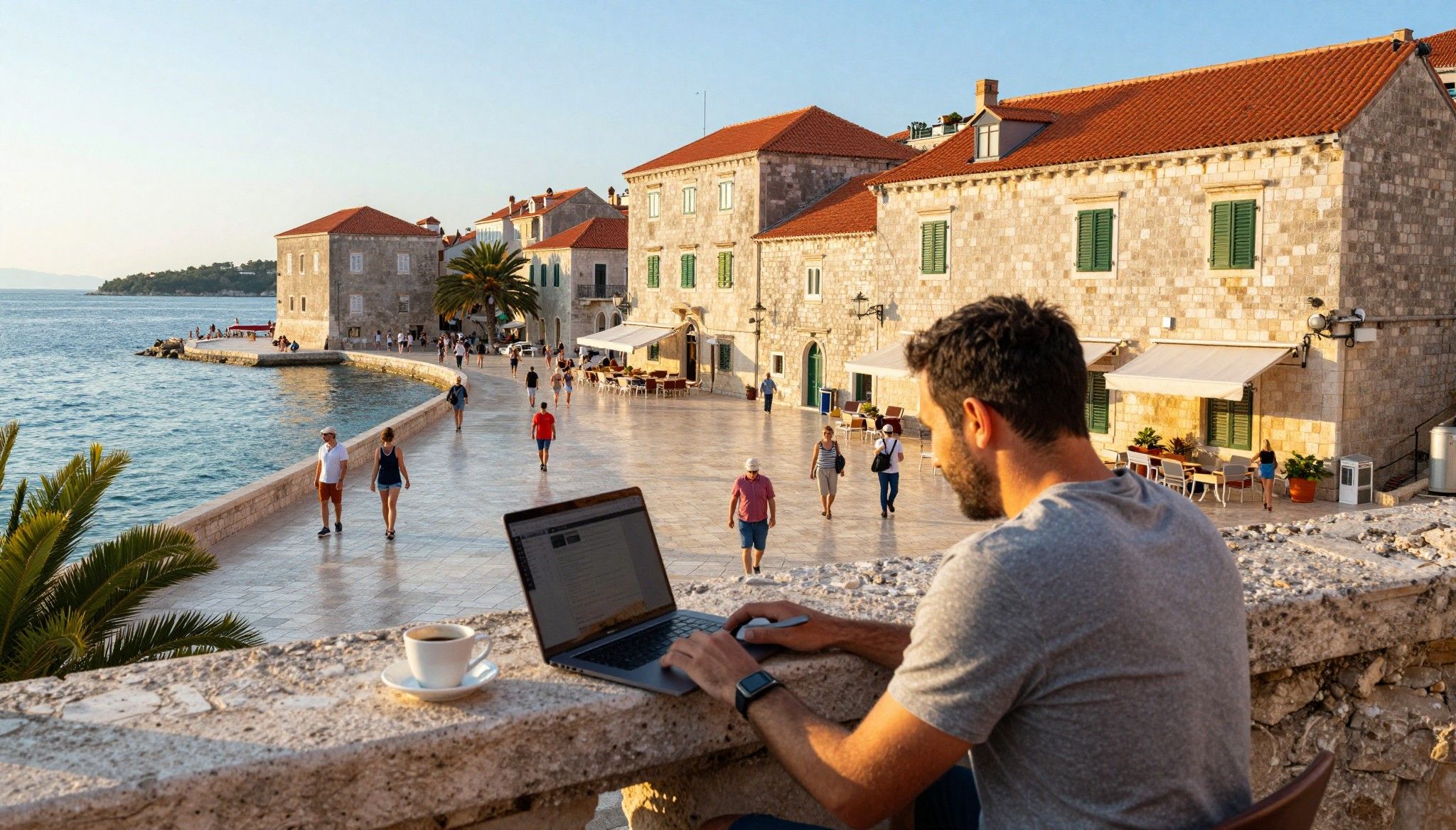
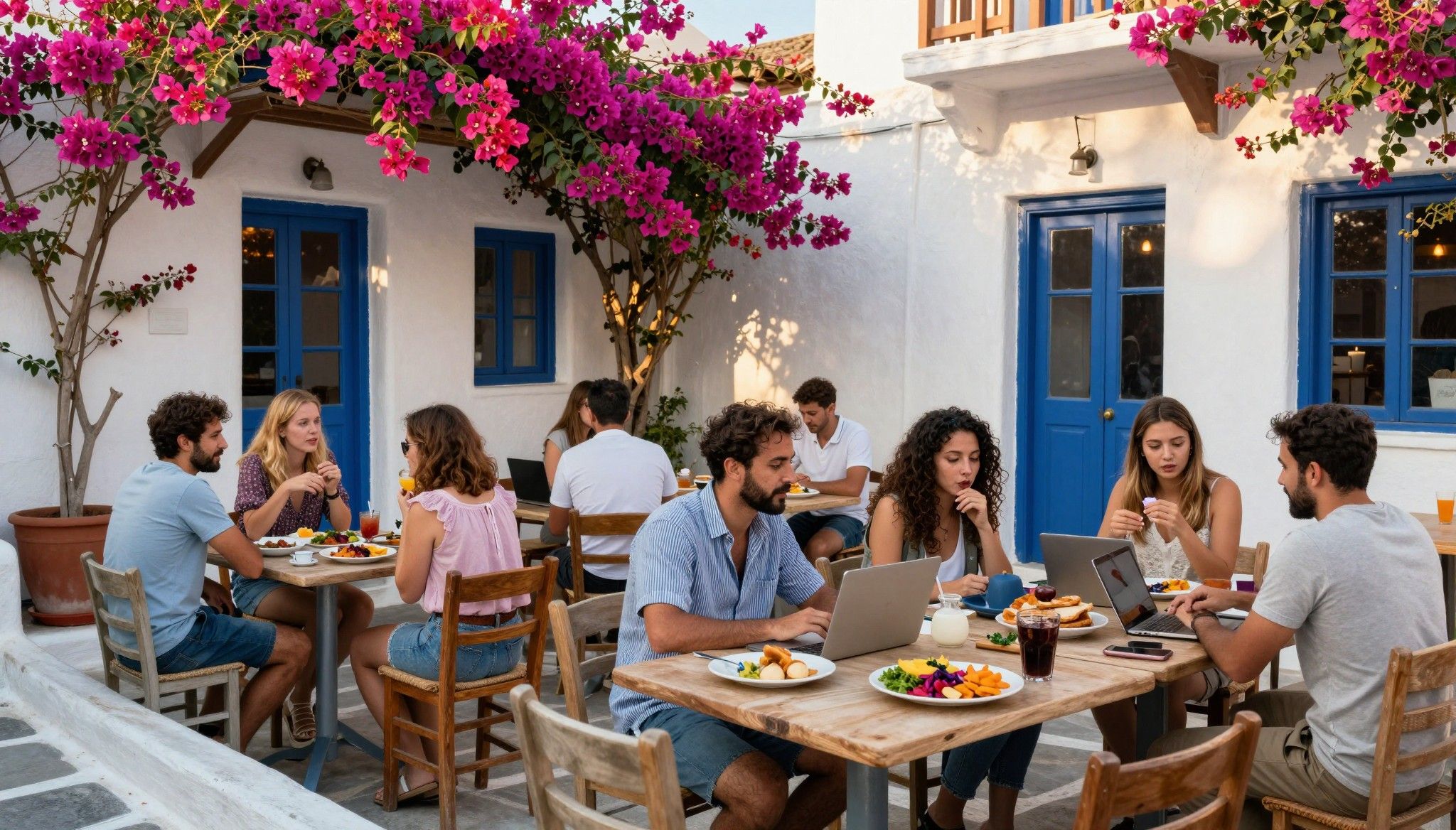
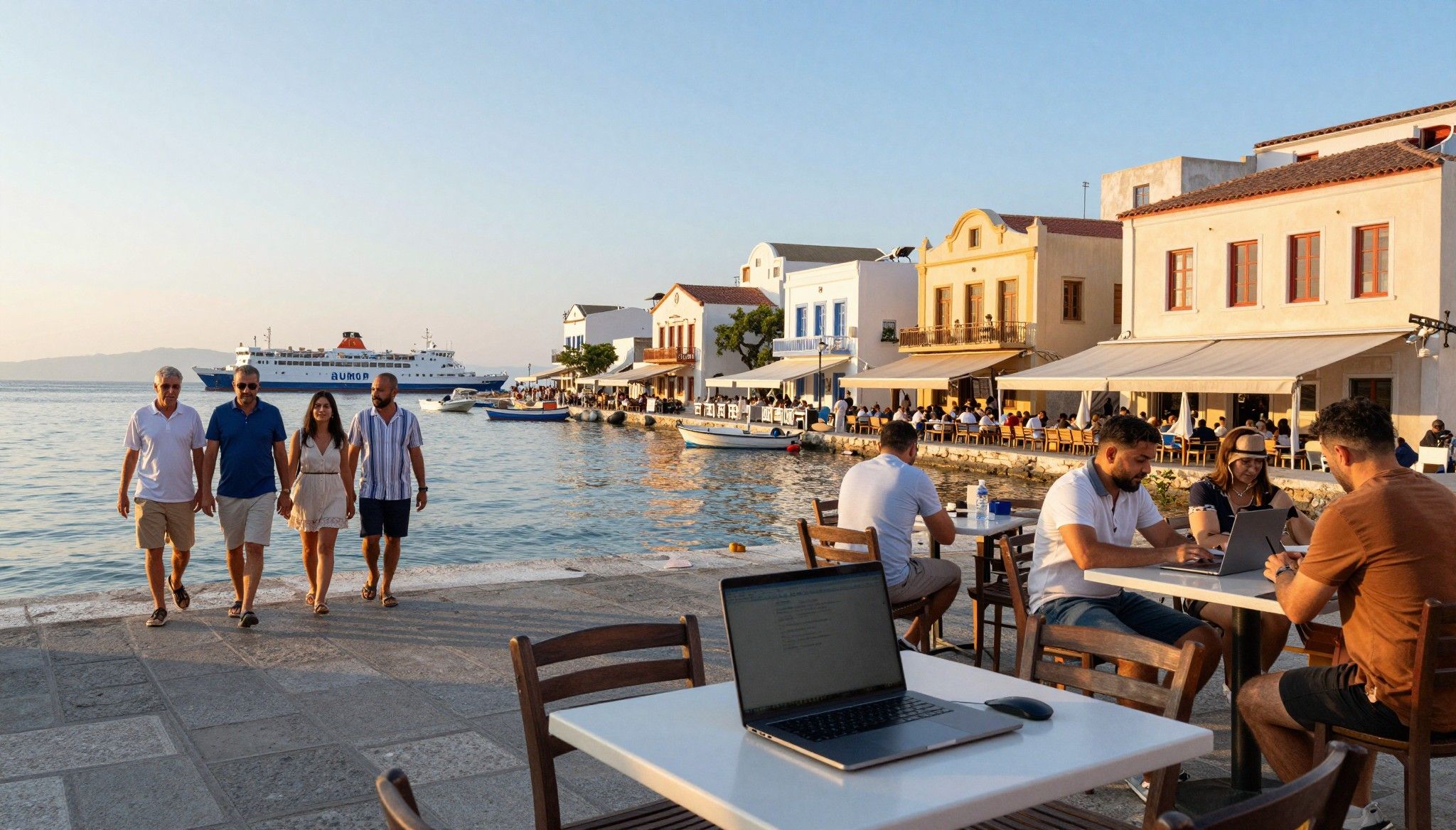
Imagine sipping a morning espresso under a plane tree in Trastevere, opening your laptop at a sunlit co‑working loft in Milan, then catching a weekend train to a Tuscan farmhouse — Italy makes that life possible. But romantic days need realistic plans: visas, tax choices, and local experts who know how to match a neighbourhood’s rhythm to your work style. This piece compares the visa-friendly routes that actually let nomads and remote professionals live like locals — while grounding the lifestyle in market reality and practical next steps. We mix the sensory — markets, cafes, beaches, piazzas — with the hard facts you’ll want before you put down a deposit.
Living the Italy lifestyle (and where remote work fits)
Italy feels like a sequence of theatrical scenes: pastel Amalfi facades at dusk, the clipped geometry of Milanese streets, and the slow, herb-scented mornings of Puglia. For a nomad, lifestyle choices determine property type — a fifth-floor historic flat near Navigli suits coffee‑and‑coworking days, while a farmhouse in Chianti gives you garden office hours and fresh markets on Saturday. Expect human-scale neighbourhoods, heavy café culture, and seasons that rewrite daily life: winters are for museums and markets, summers for outdoor piazzas and beach offices. The trick as a buyer is matching a visa route to that life — some permits are short-term and flexible; others lead straight toward long-term residency.
Neighborhood spotlight: Rome – Trastevere vs. Prati
Trastevere is romantic chaos: narrow cobbled alleys, late‑night trattorie, and a strong community feel that makes it easy to fall in. Prati, across the river, is calmer, more ordered, with wide sidewalks, cafes for daytime work, and fast links to the Vatican and central train hubs. If you need reliable fiber and daytime coworking with easy client calls, Prati or Monti‑like areas usually win; if you want to live inside the nightlife and neighbourhood gossip, Trastevere rewards you with a social calendar. For property shoppers this means: trade-offs between quiet daytime workspaces and evening atmosphere — choose based on your work hours and soundproofing needs.
Food, markets and seasonal living: Milan, Bologna, and coastal towns
Food in Italy is neighborhood currency: fresh produce at Mercato Centrale in Florence, late‑night aperitivo in Navigli, fish auctions in Chioggia. Coastal towns like Liguria or Puglia switch tempo seasonally — vibrant in summer, quieter and more local in winter, which affects rental demand and negotiation opportunities. Cities such as Milan and Bologna host thriving startup and coworking scenes year-round, making them natural hubs for nomads who need both community and fast internet. Those rhythms should shape neighbourhood choice: ask local agents about seasonal occupancy and fiber availability before signing.
- Mercato and lifestyle highlights: pick‑up groceries at Campo de’ Fiori; weekday coworking at Copernico Milano; weekend truffle markets in Alba; ferry mornings from Positano; late‑night jazz in San Lorenzo, Rome.
Making the move: visa routes that actually support life in Italy
If you love the lifestyle, choose the visa that lets you live it without constant renewals. Italy now offers concrete paths that align with different priorities: a digital nomad visa for remote professionals, an investor visa for deeper economic commitment, and elective residency for those with passive income. Each route has practical thresholds — minimum income, proof of housing, or minimum investments — and different timelines to apply for a permesso di soggiorno or longer residency. Understanding which one fits your income pattern and long‑term goals saves time and prevents mismatched property purchases.
Digital nomad visa: what it gives you (and what it asks)
Launched in 2024, the Italian digital nomad visa can be issued for one year and is renewable from inside Italy if you keep meeting criteria. Key asks: a minimum annual income around €28,000, proof of accommodation, comprehensive health insurance, and evidence of at least six months’ remote work experience. It’s built for highly skilled remote workers — freelancers and employees alike — and often allows family reunification if local authorities agree. For buyers, the visa is a fit if you plan to rent first or buy modestly while you test neighbourhoods and build local ties.
Investor and elective residency: slower tracks, deeper roots
The Investor Visa requires substantial capital — options include €500k into an Italian company or €2m in government bonds — and gives a clearer path for long-term residency and business ties. Elective residency is aimed at those with guaranteed passive income (pensions, investments) who don’t plan to work in Italy. Both routes are more paperwork-heavy but reduce the stress of yearly renewals and make buying a full-time home easier. If you’re buying a family home or restoring a historic property, align your purchase timeline with the visa process to avoid months of limbo.
- How to match visa to lifestyle and purchase plan: 1) If you want flexibility and a trial, apply for the digital nomad visa and rent for 6–12 months. 2) If you plan long-term residency and business activity, consider the Investor Visa and scout cities with entrepreneurial communities (Milan, Bologna). 3) If income is passive (pension, investments), elective residency frees you to focus on lifestyle properties in regions like Umbria or Liguria.
Insider knowledge: market realities, taxes, and agent selection
Across Italy the market is mixed: ISTAT shows modest annual price growth in 2025, with regional variation — cities and existing stock often outperformed new builds. That means there are still negotiable pockets, particularly off-season coastal towns and lower‑demand southern cities, while Milan and Florence remain pricier. Don’t assume ‘cheap Italy’ is universal: check local HPI trends, recent sales volumes, and typical days-on-market before making offers. Use an agency that demonstrates neighborhood-level data and can show recent comparable sales — not just glossy photos.
Cultural and practical red flags expats often miss
Buyers forget local seasonality: a cliffside rental that rents well in August might be almost empty in winter, affecting short-term income expectations. Others underestimate bureaucracy: registering residency (anagrafe), joining the national health service, and unlocking mortgages can take weeks and require local ID numbers. Language matters: basic Italian speeds up residency registration and builds goodwill at the town hall. Finally, check property titles carefully — historic homes often carry easements or restoration obligations that surprise foreign buyers.
Taxes and special regimes that affect lifestyle choices
Italy also offers tax incentives that can change the math on buying: special regimes for new residents and some incentives for high‑earners moving their tax residence. The investor visa portal and tax guides note tailored regimes that may lower effective taxation for a period — worth discussing with a cross-border tax advisor before you sign. Even basic residency changes can affect healthcare contributions (some sources estimate around €2,000/year for NHS registration if private cover isn’t used), so budget for that when comparing neighborhoods and properties.
- Local agent checklist — ask these before you commit: confirm fiber/internet speeds; show recent comparable sales (last 12 months); explain seasonal rental patterns; list municipal restoration rules; outline expected timeline for residency registration.
Which agency to choose — lifestyle-savvy vs. transaction-first
Pick an agency that knows the nomad rhythms: which streets have coworking nearby, which buildings accept short-term rentals, and which neighbourhoods host expat meetups. Agencies that simply list properties without lifestyle context are a red flag — you want an advisor who can say “this apartment has good daytime light for calls” or “this balcony gets sunset light for terrace dinners.” Also ensure they coordinate with immigration lawyers and local accountants; the best local teams stitch lifestyle and residency into one plan. Ask for client references, ideally other international remote workers who bought recently.
What expats wish they'd known (real stories and final steps)
A friend who moved to Lecce on a digital nomad visa told me the first winter felt like a slow, local apprenticeship: markets opened in different places, and social life adjusted. Another couple who used the Investor Visa bought a restored farmhouse but didn’t budget for seismic or heritage works — which added months and thousands in costs. These stories matter because they turn hypotheticals into concrete caution: time, local rules, and seasonal swings change the dream. Use those lessons to shape your buying timeline: rent first, build local networks, then buy with a confident visa and a realistic renovation budget.
Integration tips: language, community, and everyday life
Learn basic Italian phrases for bureaucracy and neighbours — “avviso” and “comune” will save time at the town hall. Join local Facebook groups and coworking meetups (Milan’s Copernico, Rome’s Impact Hub) to build community quickly. For families, scout international schools early; for retirees, check provincial health services and nearest hospitals. Integration isn’t magic: it’s predictable steps that make Italy feel like home faster.
Long-term outlook: will Italy remain visa-friendly?
Italy’s recent introduction of the digital nomad visa and continued investor incentives signal a policy push to attract mobile talent and capital. Market data from ISTAT shows modest growth and healthy transaction volumes through 2025, suggesting solid demand but regional diversity. Policy tweaks are possible — so plan for flexibility: start with a refundable rental or short purchase contingency, and involve immigration counsel early. That protects both the lifestyle you crave and the investment you make.
- Practical next steps (in order): 1) Choose the visa route that fits your income and timeline. 2) Rent in your target neighbourhood for 3–12 months to test daily life and connectivity. 3) Hire a bilingual agent and an immigration/tax advisor. 4) Check HPI and recent comps for your micro‑area. 5) Make an offer with a realistic contingency for residency timing.
Conclusion: Italy hands you the scenes — piazzas, beaches, markets — but you create the life by matching visa, neighbourhood, and property to your daily work. Start with a visa that suits your income and commitment level, rent to learn the rhythms, and bring a local agency that speaks nomad. Make the move thoughtful, and Italy will reward you with a life that’s as practical as it is beautiful.